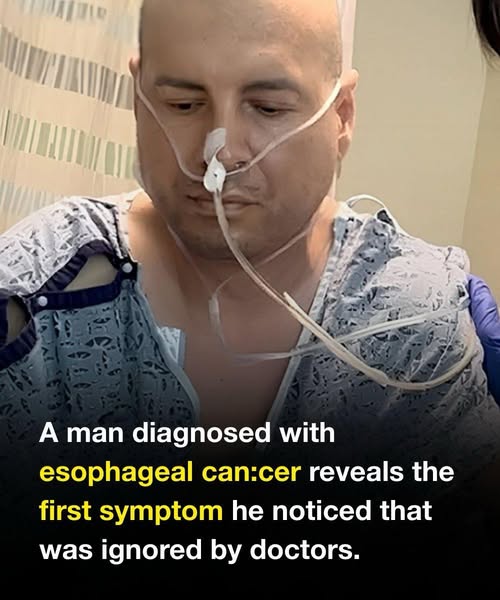

The human body is an intricate communicator, often speaking in subtle, easily dismissed murmurs long before it resorts to a shout. For Mark Sevillano Jr., a 41-year-old father from California, the first signs of a life-altering crisis arrived not as a dramatic collapse, but as a minor inconvenience—a fleeting sensation of food catching in his throat. His subsequent journey from a health-conscious father to a cancer survivor serves as a profound cautionary tale, particularly for seniors and those who believe that a healthy lifestyle serves as an impenetrable shield against serious illness. It is a story that highlights the devastating consequences of medical complacency and the vital importance of self-advocacy in an increasingly strained healthcare system.
By the beginning of 2024, Mark felt he had finally navigated the most turbulent waters of his life. He had emerged from a grueling divorce, balanced the demands of single fatherhood, and successfully returned to school to earn his degree. With the weight of those sacrifices behind him, he dedicated himself to a radical reconstruction of his health. He became a fixture at the gym three days a week, refined his diet, and embraced mindfulness practices to heal both his body and spirit. To those around him, Mark was the picture of vitality—a man who had successfully reclaimed his future through sheer discipline.
Yet, it was against this backdrop of peak physical fitness that the first “whisper” occurred. During meals, certain foods began to feel sluggish as they moved down his esophagus. It was a sensation so minor that Mark initially attributed it to acid reflux or perhaps a lingering seasonal irritation. He found that a simple glass of water usually cleared the obstruction, allowing him to carry on with his busy day. However, as the weeks bled into months, the “stuck” feeling became more persistent. Soft foods that should have slid down easily began to feel like obstacles. Mealtimes, once a source of joy and connection with his two children, began to be clouded by a growing, private anxiety.
This specific symptom—dysphagia, or difficulty swallowing—is a classic red flag that is frequently ignored. For seniors, in particular, changes in digestion are often brushed off as inevitable byproducts of the aging process. But as Mark’s experience demonstrates, the body does not differentiate between “normal aging” and a burgeoning pathology. When Mark finally sought medical advice, he encountered a secondary, more dangerous obstacle: the assumption of health. Because he was young, fit, and lacked the “typical” profile of a cancer patient, his primary care physician was unconcerned. His symptoms were dismissed as routine reflux, and while a swallowing test was eventually suggested, it was not given the urgency that a more symptomatic profile might have commanded.
This period of “medical negligence through delay” is a reality that many patients, especially older adults, know all too well. When a patient’s appearance contradicts their symptoms, clinicians may fall into the trap of confirmation bias, overlooking serious possibilities in favor of more common, benign explanations. For Mark, the delay allowed a strawberry-sized tumor to continue its silent expansion within his esophagus.
The situation reached a breaking point when the discomfort evolved into sharp, undeniable pain. Swallowing became nearly impossible, and Mark rushed to the emergency room, instinctively knowing that the time for “watching and waiting” had passed. It was there, amidst the sterile lights and urgent activity of the ER, that the truth was finally unmasked. A mass was detected in his esophagus. Within days, the healthy, active 41-year-old was told he had esophageal cancer. The weight loss he had attributed to his new gym routine and clean eating was, in reality, the first sign of his body being consumed from within.
The battle that followed was nothing short of a surgical and psychological odyssey. In October, Mark underwent a grueling, high-stakes procedure to save his life. Surgeons removed nearly 15 centimeters of his esophagus, extracting the tumor and reconstructing his digestive tract using a section of his own intestine. It was a masterpiece of modern medicine, but it left Mark in a state of profound physical exhaustion. The recovery was not merely a matter of healing from a wound; it was an entire restructuring of how his body processed nourishment.
Following the surgery, Mark began the punishing regimen of chemotherapy. The treatments were designed to hunt down any lingering malignant cells, but they also sapped his strength, altered his daily routines, and tested the limits of his resolve. Yet, throughout this ordeal, Mark maintained a singular focus: his children. He recognized that his survival was not just a personal victory, but a necessity for the two young lives that depended on him.
Beyond the physical toll, Mark’s journey shed light on the brutal financial realities of a cancer diagnosis. Even with insurance and a full-time career, the costs associated with oncology, specialized surgery, and long-term recovery are staggering. This reality serves as a sobering reminder for Americans on fixed incomes. It underscores the absolute necessity of comprehensive health planning—whether through Medicare supplement plans, critical illness cover, or life insurance—to ensure that a medical crisis does not become a financial catastrophe.
Today, Mark Sevillano Jr. is in remission. He will spend the next five years under the vigilant eye of his oncology team, but he faces the future with a renewed sense of gratitude and a powerful message for the public. His primary takeaway is that the patient is the ultimate authority on their own body. If a symptom feels wrong, if a change persists, or if a doctor’s dismissal doesn’t sit right with your intuition, you must demand further investigation. You must be the loudest voice in the room when it comes to your own survival.
For the senior community, Mark’s story is particularly resonant. Age should never be used as a blanket explanation for persistent fatigue, swallowing difficulties, or unexplained weight loss. Early detection remains the most potent weapon in the medical arsenal, but it requires a partnership between a vigilant patient and a responsive medical team. Mark’s journey proves that while life can pull the rug out from under you in an instant, early action and a refusal to be ignored can provide the footing needed to stand back up.
The lesson is simple but life-saving: listen to the quiet signals. Trust the whispers of your body before they become a shout, and ensure you have the healthcare support systems in place to act when they do. Mark Sevillano Jr. reclaimed his life by finally demanding to be heard; his story ensures that others might not have to wait quite so long to find their own answers.