
In the predawn stillness of a Minneapolis neighborhood, the sharp crack of gunfire shattered what had been an otherwise quiet night. Within minutes, an unexpected civilian witness stepped into a scene that would later become central to a growing national debate over the use of force and the handling of medical emergencies during federal enforcement operations.
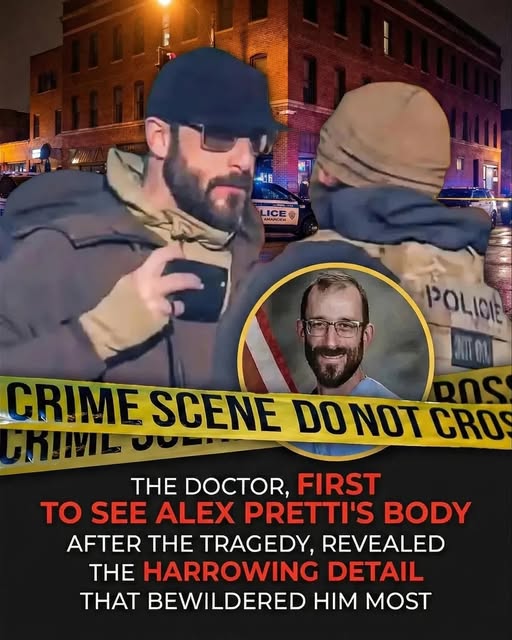
The witness was a 29-year-old pediatrician who lived nearby. Awakened by the sound of shots and the commotion that followed, the doctor quickly realized someone had been seriously injured. Acting on instinct and training rather than any sense of obligation, the physician rushed outside toward the source of the disturbance. What they encountered, according to a sworn statement later submitted in federal court filings, was a scene that raised immediate medical and ethical concerns.
Lying on the pavement was Alex Pretti, later identified as the individual who had been shot during the operation. He was positioned on his side, surrounded by several federal immigration agents. From the physician’s perspective, this alone was troubling. The doctor later stated that such positioning was unusual and potentially dangerous for someone who had sustained gunshot wounds, as it could interfere with breathing, circulation, and the ability to properly assess injuries. Even more concerning, the physician observed that no one appeared to be actively administering medical aid.
The doctor approached the agents and asked whether Pretti had a pulse. According to the statement, the response was uncertain. No one could say definitively whether he was alive or not. The physician then identified themselves as a doctor and requested permission to help. Rather than being waved through immediately, the doctor was asked to provide credentials and was briefly searched. Only after this delay was the physician allowed to get closer to the injured man.
Once access was granted, the doctor’s training took over. They asked that Pretti be turned onto his back so a proper assessment could be made. When this was done, additional injuries became visible, reinforcing the seriousness of his condition. The physician checked for vital signs and found none. There was no detectable pulse. Without further delay, the doctor began CPR, working methodically and continuously in an effort to restore circulation and breathing.
Emergency medical responders eventually arrived and took over care. By that point, the doctor had been performing life-saving measures for several critical minutes. Shortly afterward, the situation escalated further as law enforcement moved to control the surrounding area. Tear gas was deployed to disperse crowds that had begun to gather, and the gas spread beyond the immediate scene, drifting into nearby streets and even residential buildings.
The physician was forced to leave the area, coughing and disoriented from the tear gas, and later described the emotional toll of the experience. In the sworn account, the doctor said they felt shaken, unsettled, and unsure about their own safety, particularly given how quickly the situation had spiraled from a medical emergency into a heavily militarized scene. The incident left the physician questioning whether it was safe to return home that night.
As details emerged, the shooting quickly drew national attention. Alex Pretti was identified not only as a U.S. citizen, but also as an intensive care unit nurse at the Minneapolis Veterans Affairs Medical Center. Colleagues described him as deeply compassionate, someone who brought both skill and empathy to his work with critically ill patients. Friends and family spoke of his commitment to social justice, environmental causes, and civic engagement. They said he regularly participated in lawful protests and believed strongly in standing up for the vulnerable.